
HeatherBee Kennels prioritizes the health and overall soundness of our dogs, allowing us to confidently provide families with puppies that will live good, long lives. Below is an explantion of the testing we pursue with our dogs, the information that provides us with, as well as the limits to what testing and screening can provide.
Genetic (DNA) Testing
There are essentially three clusters of information a breeder seeks when genetically testing a breeding dog.
- Inherited Disease Genetic Markers
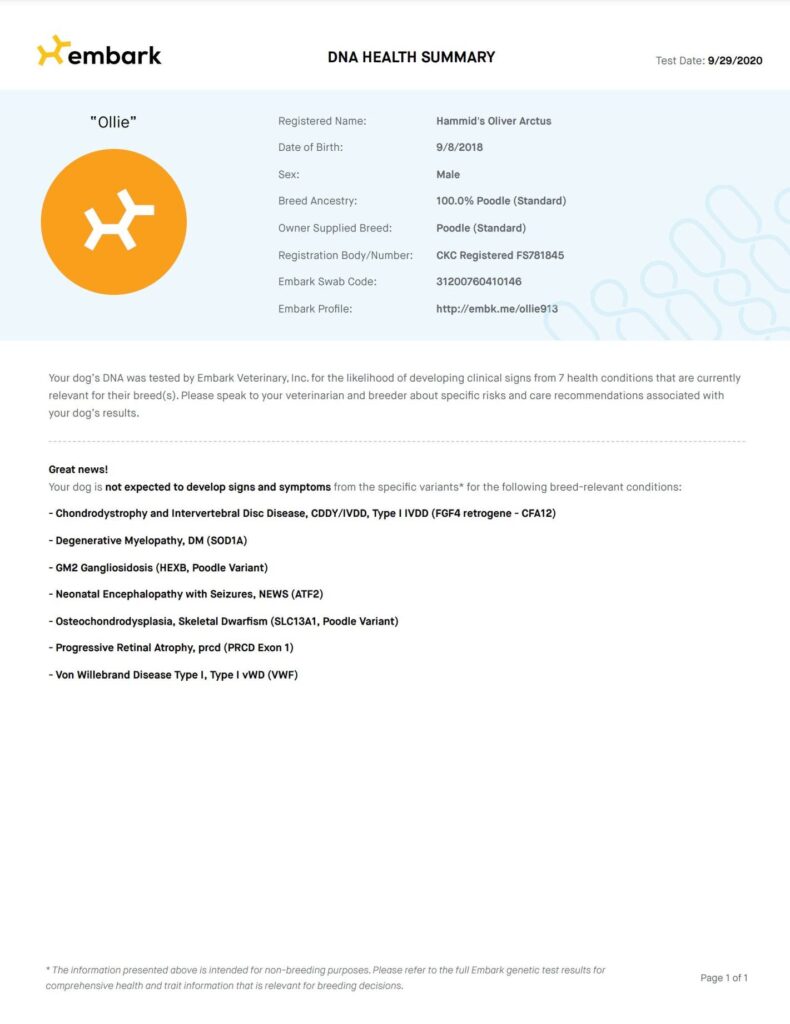
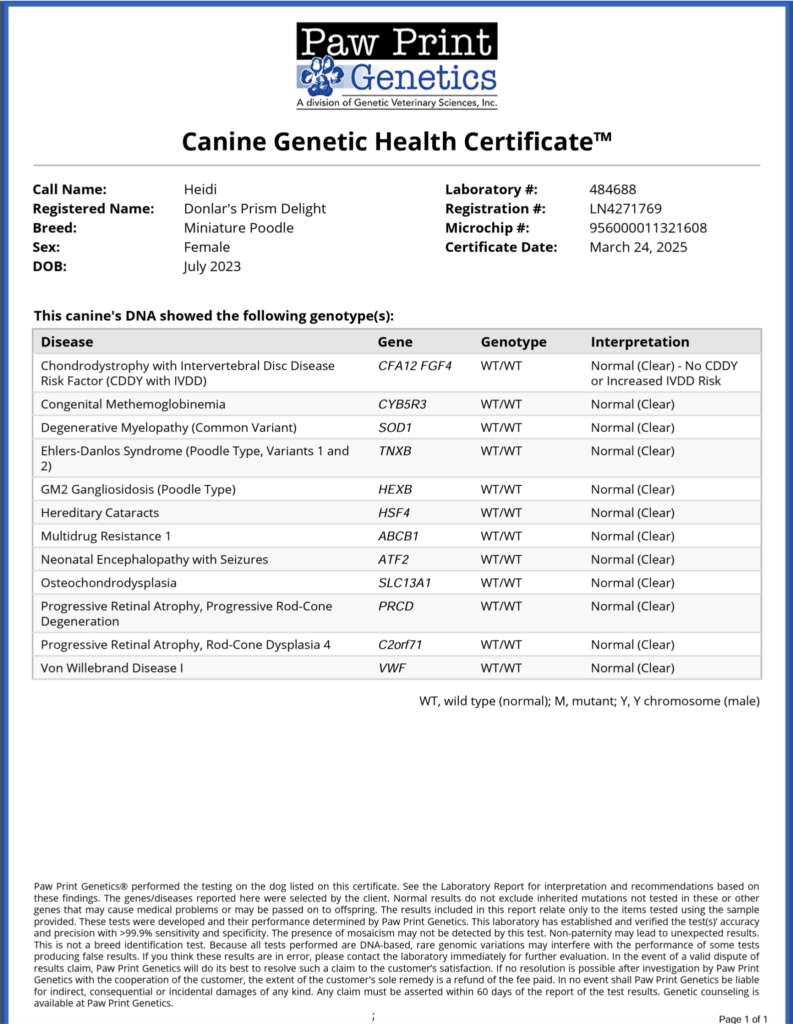
- This can be valuable information for all breeds. Generally speaking, a genetic test for a specific disease or condition will be found normal/clear, notable/carrier if one of two genes carry a marker for a condition, or at risk if the dog carries both variants or genetic markers for a condition. The terminology may vary slightly from one lab to the next, however it comes down to whether the dog carries no markers, one variant or marker, or two. It is important to understand that there are limits to what can be tested for. For example, Scottie Cramp or Celebellar Atrophy has no test available currently. The breeder’s familiarity with their dogs, the history of previous generations, and breed specific health concerns is crucial information.
OFA – Orthopedic Foundation for Animals
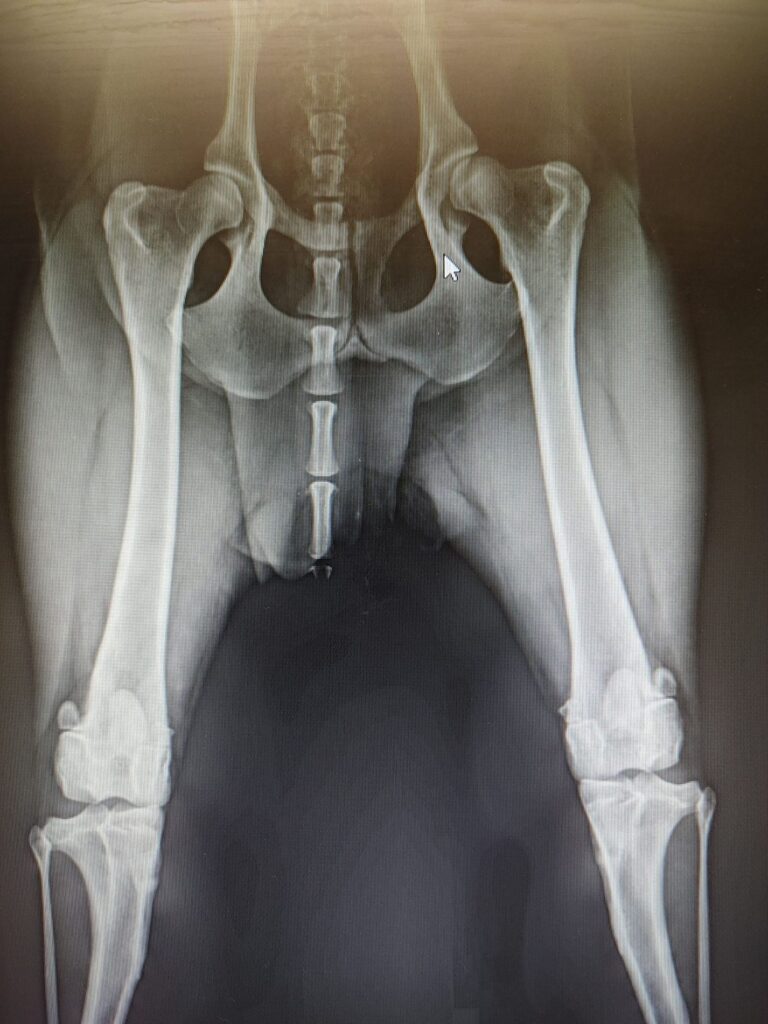
The OFA offers both interpretive services whereby dog’s xray images, for example of hips and elbows, are reviewed by accredited veterinarians which can lead to OFA certifications. The OFA also operates a breed specific registry of various health makers through their CHIC program. DNA test results can also be registered with the OFA. Canadian options at one time included the Veterinary Program at the University of Guelph but that program is no longer in operation. OFA preliminary screening results can be obtained for dogs as young as 4 months, publised results at one year, and certified results at 2 years.
For normal hip conformations, the reliability was 89.6% at 3-6 months, 93.8% at 7-12 months, and 95.2% at 13-18 months. These results suggest that preliminary evaluations of hip joint status in dogs are generally reliable. However, dogs that receive a preliminary evaluation of fair or mild hip joint conformation should be reevaluated at an older age (24 months).
Recommended Tests/CHIC Program Requirements
The OFA, working with the breed’s parent club, recommends basic health screening tests for all breeding stock. Dogs meeting these basic health screening requirements will be issued Canine Health Information Center (CHIC) numbers. For CHIC certification, all results do not need to be normal, but they must all be in the public domain so that responsible breeders can make more informed breeding decisions. For potential puppy buyers, CHIC certification is a good indicator the breeder responsibly factors good health into their selection criteria. The breed specific list below represents the basic health screening recommendations. It is not all encompassing. There may be other health screening tests appropriate for this breed. And, there may be other health concerns for which there is no commonly accepted screening protocol available.
| Screening Tests Required for Scottish Terriers | Testing options |
|---|---|
| von Willebrand’s Disease | DNA-based vWD test from an approved lab; results registered with the OFA |
| Patellar Luxation | Veterinary Evaluation of Patellar Luxation. Results registered with OFA. |
| Craniomandibular Osteopathy (CMO) | DNA based CMO test from an approved lab, results registered with the OFA. |
| Health Elective | One of the following: Autoimmune Thyroditis Evaluation from an approved Lab. Results registered with OFA. ACVO Eye Examination. Results registered with OFA. OFA Radiographic evaluation for Legg-Calves-Perthes OFA Serum Bile Acid Evaluation OFA Kidney (UP/UC Ratio) Screening |
PennHIP
PennHIP testing provides an estimate of the risk for osteoarthritis (OA) and canine hip dysplasia (CHD). The test is accurate in dogs as young as 16 weeks of age. For breeding dogs, early detection of at-risk hips can allow the breeder to make early, informed decisions as to which dogs to keep in breeding programs. PennHIP results can be obtained through your local veterinarian who is certified to provide the evaluation.